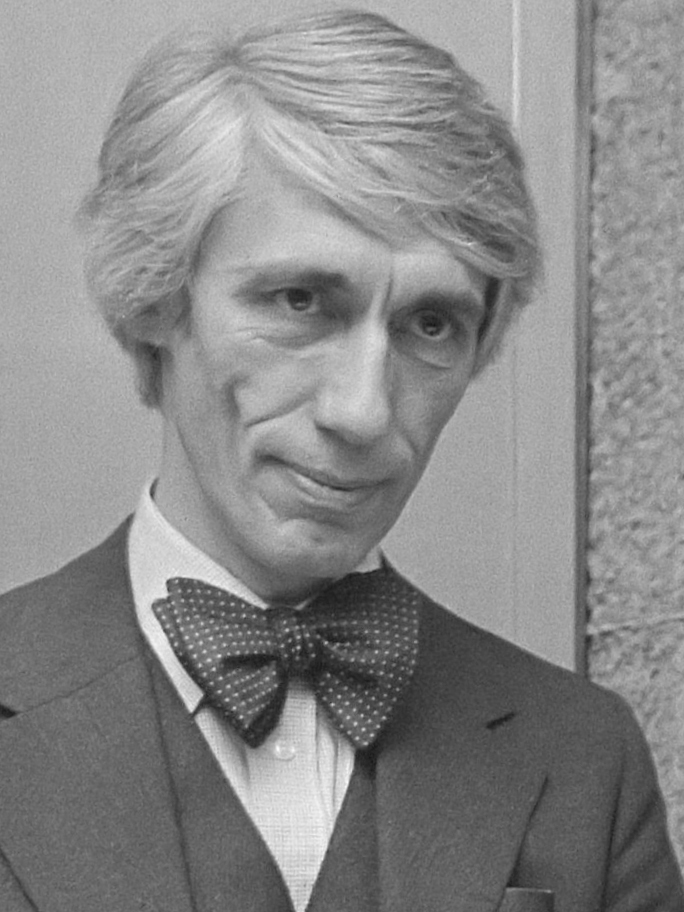
Matthew Carter
Contents 7 sections +
Contents
Overview
According to TypeRoom, Carter designed Verdana and Georgia for Microsoft in 1996 as legible screen fonts, a point on which the panel's sources or readings disagree.1
At a glanceSourced facts

At a glance
Background
According to Eye Magazine, in 1981, Carter co-founded Bitstream Inc. in Cambridge, Massachusetts with Mike Parker and two other colleagues.2 According to Eye Magazine, Carter and Cherie Cone founded Carter & Cone Type in 1992.2 According to Eye Magazine, Carter released a version of ITC Galliard with expert sets approximately fifteen years after the face was originally created.2
Key facts


According to PRINT Magazine, Carter was named a MacArthur Foundation Fellow in 2010.3,4 According to PRINT Magazine, Carter collaborated with Berthold Wolpe in 1980 to develop an updated version of the Pegasus typeface.3 According to TED Talks, Carter gave a TED Talk titled 'My life in typefaces' at TED2014, lasting about 16 minutes.5
According to Eye Magazine, Matthew Carter is a type designer born in London in 1937.1,2,6 According to Eye Magazine, his father, Harry Carter, was a historian of printing and typography.1,2 According to Eye Magazine, “Carter was typographic consultant to Her Majesty’s Stationery Office from 1980 to 1984”.2
According to TypeRoom, after leaving school in 1955, Carter spent a year at Enschedé in the Netherlands learning to cut metal type by hand.1,6 TypeRoom says the hand metal-type skill Carter learned at Enschedé later proved commercially obsolete.1 According to TypeRoom, Carter created multiple typefaces tailored to technical constraints, including CRT Gothic in 1974 and Video in 1977.1
According to TypeRoom, his typefaces include Bell Centennial, ITC Galliard, Miller, Georgia and Verdana.1,4 According to TypeRoom, Bell Centennial was among Carter’s designs addressing constraints of a particular reproduction technology.1 According to TypeRoom, Carter taught a class at the Yale graphic design school for over 30 years.1
According to TypeRoom, Carter was appointed CBE in the 2020 Birthday Honours for services to typography and design.1 According to TypeRoom, Carter was appointed Commander of the Order of the British Empire in the 2020 Birthday Honours.1 According to Matthew Carter, Carter based Miller on the Scotch Roman tradition and researched historical examples at London’s St Bride Library.4 The Boston Globe reports Carter assigned Georgia’s rights to Microsoft and received no royalties afterward.7
Viewpoints and evidence
A PRINT interview states that exclusive type-design livelihoods were once rare and, except for Frederic W. Goudy, usually tied to foundries.3 Carter says Miller and Wrigley began as speculative designs and later found clients and business.3 According to Matthew Carter, in the early 1960s at Deberny & Peignot, Adrian Frutiger showed Carter designs begun in white paint on black paper.3
Carter said Frutiger's white-on-black method involved drawing the space around a letter rather than the letter itself.3 Carter's type designs include some of the world's most familiar digital typefaces, according to TED.5,7 According to TED speaker page quotation, TED describes Carter as 'the most important typography designer of our time.'5
According to Design and typography commentators, designers and industry commentators view Matthew Carter as one of the most prominent typographic designers of his era.4,5 According to Eye magazine, Bitstream Inc. is described as the first American independent digital typefoundry.2 Carter said metal type's limited available sizes required designers to work within a fixed selection.1,2
According to TypeRoom, TypeRoom calls Carter a self-taught type designer, alongside noting his foundry training.1 According to TypeRoom, TypeRoom dates Georgia and Verdana to 1996.1 According to The New Yorker, the New Yorker commented in 2005 that Carter designs typefaces.1
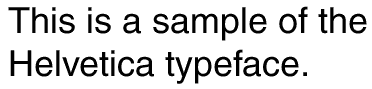
According to Matthew Carter, Carter first visited New York in 1960 and was struck by the graphic and typographic design he saw there.4 According to Matthew Carter, Carter recalls first visiting New York in 1960 and not seeing Helvetica in London in 1961, though Haas had produced it in 1957.4 Carter said that 80 to 90 percent of designing a typeface is the same regardless of the production medium.4
I can’t write code. I’m not really computer-savvy
Sources
- 1Matthew Carter: 10 things to know about - TypeRoomTypeRoom · Other · Tier C
- 2Eye Magazine | Feature | Reputations: Matthew CarterEye Magazine · Other · Tier C
- 3An Interview With Matthew Carter – PRINT MagazinePRINT Magazine · Other · Tier C
- 4Matthew CarterCreative Bloq · Other · Tier C
- 5Matthew Carter | Speaker | TEDTED Talks · Other · Tier C
- 6Matthew Carter Font | Webfont & Desktop | MyFontsMyFonts · Other · Tier C
- 7Five things you should know about Matthew Carter - The Boston GlobeBostonGlobe.com · Other · Tier C
Fact-checked by multiple models via Vercel AI Gateway
Image plates


Lifeline
1937–1996 · scroll to travel1937
1960
1960
1974
1980
1981
1992
1996
8 dated events from this entry and its sources · Age: years since birth in 1937