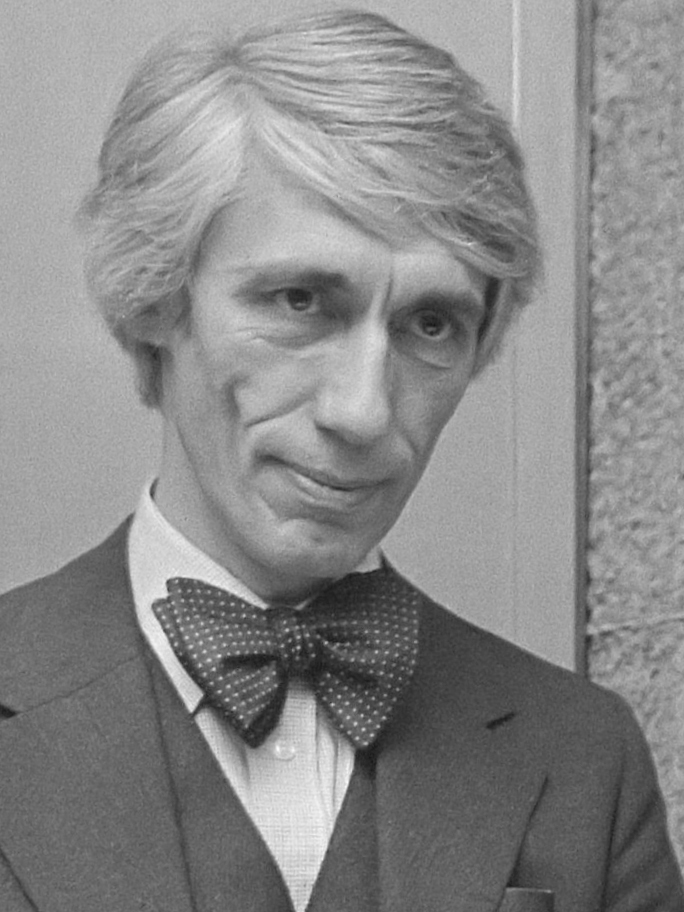
Jan Tschichold
- Typography
- Graphic Design
Contents 9 sections +
Contents
Overview
Jan Tschichold (born Johannes Tzschichhold; 2 April 1902 – 11 August 1974) was a German typographer, book designer, teacher, and writer who significantly influenced graphic design and printing.1,2,3 He is recognized for his pioneering work defining the functionalist principles of the New Typography in the 1920s, and later for his classical and symmetric approach to book design, including his postwar redesign of Penguin paperback covers.1,4,5
At a glanceSourced facts

At a glance
Early Life and Education
Born in Leipzig, Germany, on 2 April 1902, Tschichold studied at the Leipzig academy of graphic arts and book trades.2 Richard Hollis notes that he worked as an avant-garde typographer in Germany during the 1920s.5
The New Typography
In 1925, Tschichold published Elementare Typographie, examining the typographic work of El Lissitzky.1 He subsequently wrote The New Typography, which set out a functionalist and information-based theory of typographic design.4
Persecution and Emigration
In March 1933, Tschichold was taken into Nazi custody.5 The Getty Research Institute's Union List of Artist Names states that he was expelled from Germany by the Nazis in 1933 due to their objections to his "un-German" typography.1 He subsequently emigrated to Switzerland during the period of Nazi rule.1
Later Career and Penguin Books
Following his early avant-garde period, Tschichold's later work shifted toward the classical, symmetric style that he had previously criticized.1 Richard Hollis reports that Tschichold is primarily remembered in Britain for his postwar refashioning of Penguin paperbacks.5 The Penguin book covers utilized color coding, featuring orange for fiction, green for crime, and blue for biography.5
Tschichold also designed multiple typefaces, including Sabon in 1967, and became a citizen of Basel in 1942.2 He returned to Switzerland in 1949 and died on 11 August 1974 in Locarno.1
Open questions
- What specific design innovations did Tschichold introduce to Penguin's cover system?
- How did his theoretical writings influence subsequent generations of typographers?
- What prompted his stylistic shift from avant-garde to classical design?
The cited sources do not settle these questions. They remain open, not guessed.
Sources
- 1ULAN Full Record Display (Getty Research)getty.edu · Universities & libraries · Tier B
- 2Tschichold, Janhls-dhs-dss.ch · Other · Tier C
- 3Jan Tschichold: contrast in theoryRIT Scholar Works (Rochester Institute of Technology) (1992) · Research · Tier B
- 4Jan Tschichold and the Language of Modernism.Visible Language (1996) · Research · Tier B
- 5Richard Hollis: the brilliance of typographer Jan Tschicholdthe Guardian · News · Tier B
Fact-checked by multiple models via Vercel AI Gateway
Image plates


Lifeline
1902–1967 · scroll to travel1902
1925
1949
1967
4 dated events from this entry and its sources · Age: years since birth in 1902