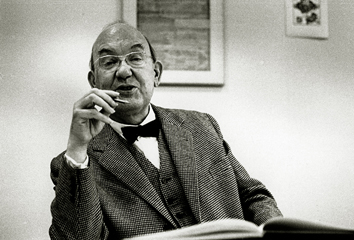
Otl Aicher
- Graphic Design
- Typography
Contents 7 sections +
Contents
Overview
Otl Aicher (1922–1991) was a German graphic designer, typographer, and professor of architecture and design. He co-founded the Ulm School of Design with Max Bill and Inge Aicher-Scholl, and headed its Visual Communication department. Aicher is recognized as a major figure in 20th-century graphic design's International Style, known for his pictograms and visual identity for the 1972 Munich Olympics.1,2,3
At a glanceSourced facts

At a glance
Ulm School of Design and early work
In the 1950s, Aicher became known as an exhibition designer through trade-fair systems.4 With Inge Scholl, sister of White Rose members Hans and Sophie Scholl, he conceived the Ulm Volkshochschule and designed 328 posters for it, continuing this work until 1960.5 Museum Ulm dates the school's operation from 1953 to 1968 and says his role there continues to affect design education.3
Olympic design and pictograms


From 1966, Aicher gradually withdrew from the Ulm school to work on the visual appearance of the 1972 Munich Olympic Games.4 His office produced graphic design for the Games, and commentators say his pictograms established the foundations of the modern pictogram by prioritizing clarity, rationality, and expressive economy.2,6 A pictogram site says his signs have guided people for fifty years or more and appear worldwide in signage, advertising, sporting events, and digital media.7
Writings and legacy
His writings, collected in Le Monde comme projet (first published in German in 1992), address graphic design, product design, and architecture.8 The HfG Ulm archive counts him among the most influential figures at the school.4
In focusVisual reference
Life, work and milestones from this entry. Select a detail to see its source.
Profile context
Otl Aicher
Overview
Ulm School of Design and early work
Olympic design and pictograms
Writings and legacy
Sources
- 1ULAN Full Record Display (Getty Research)getty.edu · Universities & libraries · Tier B
- 2Spiele: Otl Aicher's Olympic Graphic Designjoemillersco.com · Other · Tier C
- 3Otl Aicher 100 Years 100 Posters | Museum UlmMuseum Ulm · Universities & libraries · Tier C
- 4Otl Aicherhfgulmarchiv.de · Other · Tier C
- 5Otl Aicher - 328 plakate für die Ulmer VolkshochschuleMedical Entomology and Zoology (2000) · Research · Tier C
- 6Diseño con sentido común, Otl AicherVisual: magazine de diseño, creatividad gráfica y comunicación (2015) · Research · Tier C
- 7Signs instead of words – otl aicher pictogramsotl aicher pictograms · Other · Tier C
- 8Otl Aicher, Le Monde comme projetCritique d’art (2015) · Research · Tier A
Fact-checked by multiple models via Vercel AI Gateway
Image plates